
Practical
How to Buy a Copper Bar: The Complete Guide (2026)
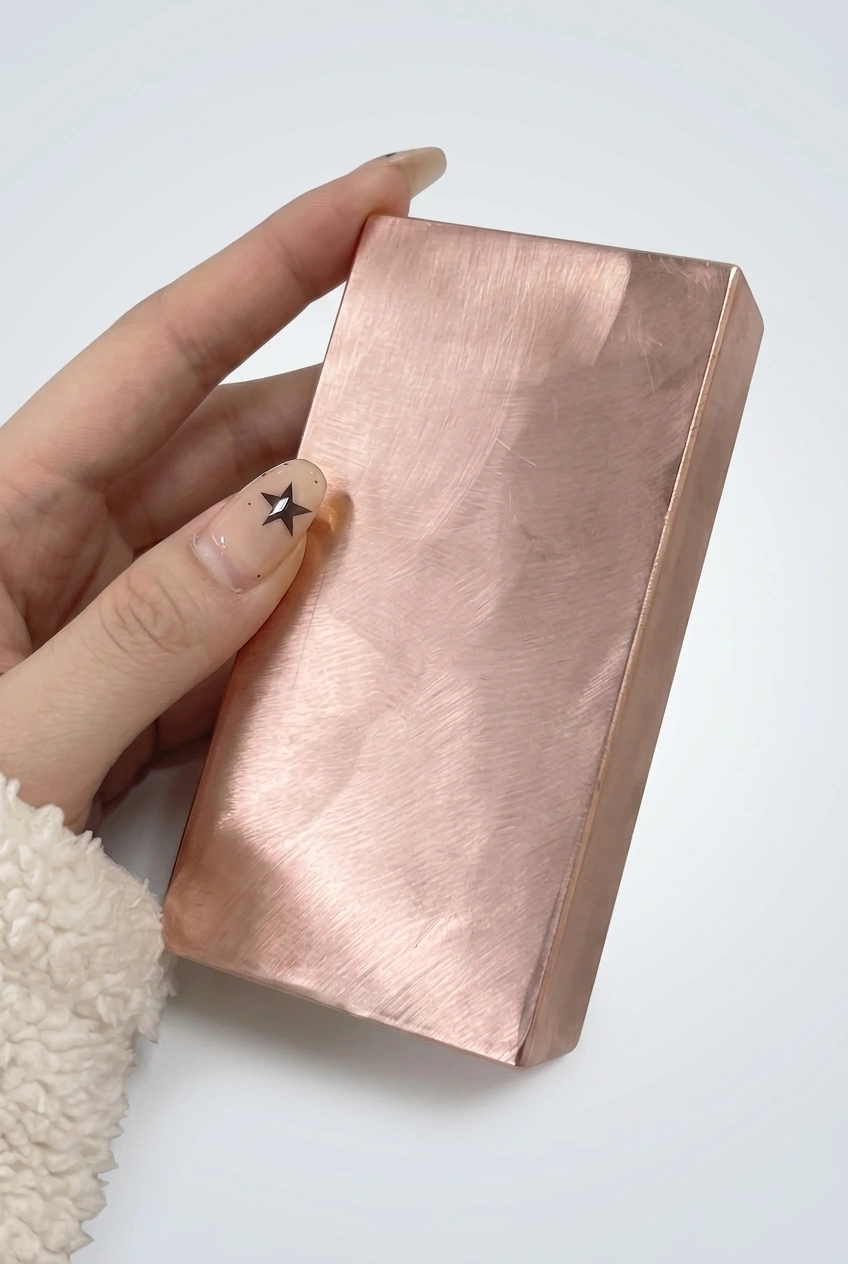
A no-nonsense buying guide for your first copper bar — without the sales pitch.
A copper bar — sometimes called a copper bullion bar, copper ingot or copper block — is one of the simplest physical objects you can own: a cast and polished piece of pure copper. But because it looks simple, the market is full of variants that look identical in a photo and feel completely different in the hand. This guide covers everything you should check before buying your first bar in 2026.
The checklist: what a real copper bar must have
Before you look at price or design, confirm the bar is actually what it claims to be. Three documents separate a serious copper bar from a decorative object:
- Purity: minimum 99.95% copper (grade C10200, oxygen-free). Lower purity is not "copper" by collector standards — it is an alloy.
- XRF verification: an X-ray fluorescence reading documenting the actual elemental composition down to the ppm level.
- Serial number: a unique number engraved on the bar so it can be traced and verified later.
- Certificate of authenticity (COA): a signed document linking the serial number to the purity and the analysis date.
- Weight with tolerance: a real bar is weighed precisely (e.g. 1000 g ± 0.1 g), not "approx. 1 kg".
At Coppervm, every bar is XRF-verified and serial-numbered before it leaves the atelier, and the COA ships in the box. Without all three you do not know what you actually own — and the secondary market heavily discounts unprovable bars.
Which size and weight should you choose?
Copper bars range from a few grams to several kilos. For most private buyers, 1 kg is the right choice, and it is no accident that it is the industry standard:
- Under 250 g: feels more like a coin or sample. The per-kilo premium gets high, and the bar loses the "solid" quality that is the whole point.
- 1 kg: heavy enough to feel real in the hand (copper is nearly as dense as steel), large enough for a legible engraving, and small enough to store, display or gift.
- 2–5 kg and up: practical only if you are buying copper in volume. Requires dedicated storage and is harder to resell to private buyers.
That is why we make only solid 1 kg bars — the same purity standard, four different motifs. It is the size that best balances value, weight and visual presence.
What does a copper bar cost — and why?
The price of a physical copper bar is not just the spot price of copper. It has three layers, and it helps to understand them before comparing offers:
| Component | What it covers | Typical share |
|---|---|---|
| Spot price (the metal) | The copper itself, at the current market price | The base |
| Premium | Refining, casting, polishing, engraving, XRF, serial number, COA, encapsulation | 8–18% over spot |
| VAT | Sales tax — copper is not exempt the way investment gold is | Local rate |
The premium is not a "brand markup" — it pays for the real work that makes a bar verifiable and durable: precision casting, mirror polishing, laser engraving, XRF measurement and vacuum sealing. A bar without that work is cheaper because it is a commodity lump, not a documented collectible.
Where to buy — and what to avoid
The biggest problem in the market is not price but authenticity. Search for "copper bar" and you quickly find products that look right but are something else:
- Brass marketed as copper: brass is a copper-zinc alloy with a similar colour but lower value and entirely different properties.
- Copper-plated zinc or steel: a thin copper layer over a cheaper core metal. Weighs and behaves differently from solid copper.
- Undocumented "99.9%" claims: a percentage printed in a listing is not a measurement. Without XRF and a COA it is just a claim.
- Anonymous marketplace sellers: no traceability, no serial number, no real return policy.
Buy from a supplier that actually documents the metal and stands behind it. See the Coppervm collection — every bar is 99.95% pure copper, XRF-verified, serial-numbered and supplied with a COA, from an atelier in Norway with fully insured shipping.
A copper bar as a gift
A copper bar makes an unusually good gift precisely because it is tangible, durable and personal. Copper is also the traditional material for the 7th anniversary. With custom laser engraving you can add a name, date or logo, and a collection box that holds three bars turns it into a presentation. Volume pricing and logo engraving are available for corporate gifts on request.
Shipping, storage and care
Copper oxidises faster than gold and silver. An unsealed bar in a humid room can develop a green patina in 12–24 months — beautiful to some, unwanted by most collectors. The fix is simple: keep the bar sealed and dry.
Every Coppervm bar ships protected, and a clear acrylic cover keeps the mirror finish and a fingerprint-free surface for decades.