
Consider
Investing in Copper in 2026: Are Copper Bars a Good Investment?
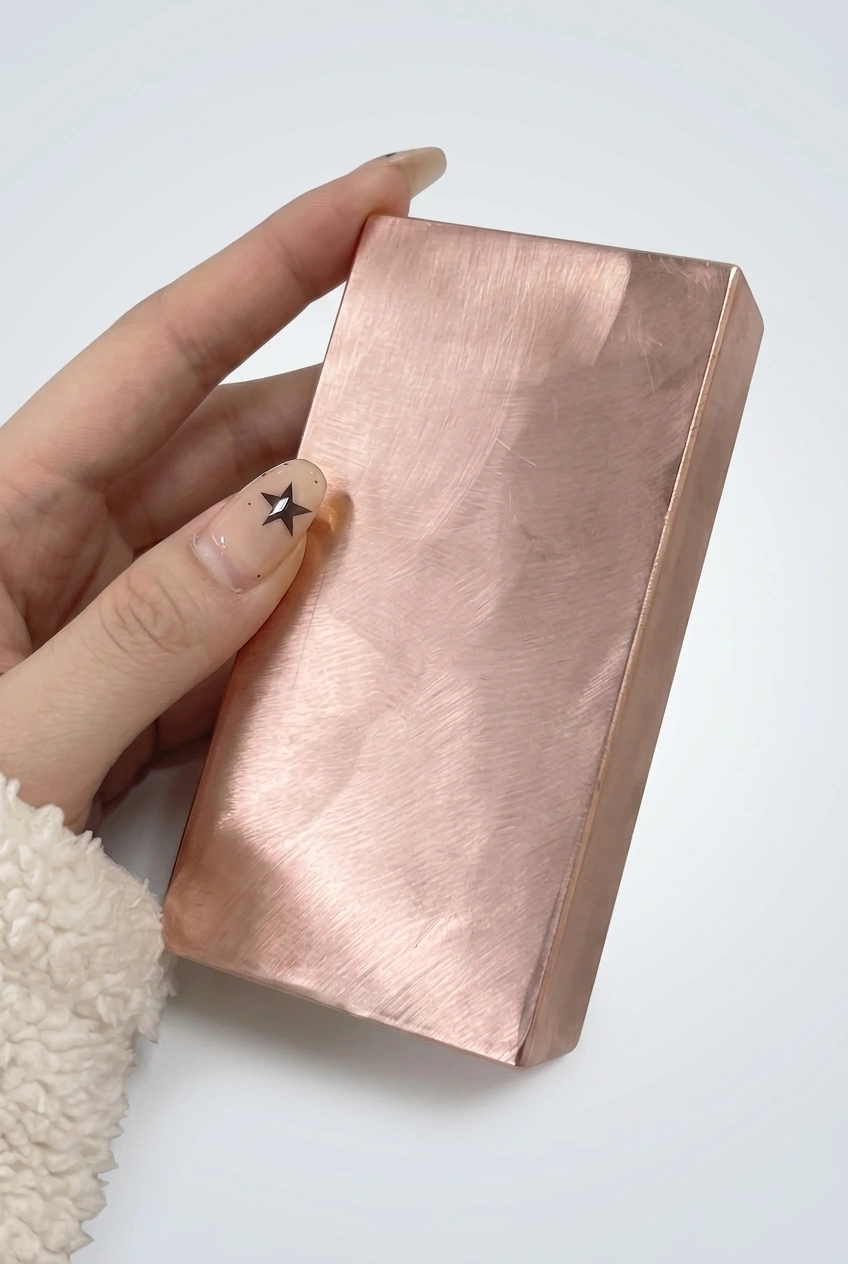
Demand, price history, alternatives and risk — without the sales pitch.
Copper is often called "the new oil" — the metal the electrification of the world cannot do without. That is a good headline and a poor investment thesis on its own. The question is not whether copper is important — it is whether it makes sense as a private investment, and in which form. This piece is for anyone evaluating copper as part of their portfolio for the first time in 2026.
Why is everyone talking about copper right now?
Copper is the only pure commodity mechanically tied to every megatrend in the economy: electric vehicles, renewable power generation, grid upgrades and the buildout of AI data centres. The IEA has repeatedly published scenarios in which copper demand doubles from 2020 levels by 2035–2040, while new mines take 10–17 years from discovery to production.
The result is what analysts call a structural supply deficit — not a cycle, but a mismatch that cannot be resolved quickly. That does not mean the price goes straight up. It means sustained price pressure is plausible in a way it is not for, say, wheat or coffee.
- An average EV uses 2–4× more copper than a comparable petrol car.
- An offshore wind turbine uses roughly 8 tonnes of copper per MW installed.
- A hyperscale AI data centre needs tens of kilometres of copper cable for power distribution alone.
- S&P Global estimates that copper demand must roughly double by 2035 to meet the energy transition.
How has copper actually performed?
Copper priced in USD per pound has a return profile closer to oil than gold: long flat stretches, then sharp upcycles when supply lags. Between 2002 and 2011 the copper price quintupled. Between 2011 and 2016 it fell more than 50%. From 2020 to 2024 it doubled again.
The lesson: copper is a cyclical real asset. It rewards patience and punishes bad timing — the opposite of how most people think about it after first hearing about the "supercycle". This is why purchase strategy (lump sum vs. steady accumulation) matters more than the metal itself.
Physical copper vs. copper ETFs vs. mining stocks
There are at least four ways to get "copper exposure" in a portfolio, and they are not interchangeable:
| Form | What you own | Counterparty risk | Volatility | Best for |
|---|---|---|---|---|
| Physical bar | The metal itself, in your possession | None | Low (spot ± premium) | Hard asset, collector |
| Copper ETF (CPER, etc.) | Fund holding futures contracts | Manager, contango drag | Medium | Trading, tactical |
| Copper futures | A delivery contract | Broker, margin | High (leveraged) | Professionals |
| Mining stocks | A company that profits from the price | Company + political | High | Growth exposure |
Physical bars are the only option that actually eliminates counterparty risk. You own the metal. It cannot go bankrupt, cannot be frozen by a broker, cannot fall on an accounting issue at the fund. It is also the only option that gives you access to the metal in a scenario where the financial system itself is what you wanted to hedge against.
In return you pay for it: storage, insurance and a premium over spot. That premium — typically 8–18% on 1 kg bars from a serious atelier — is what makes physical copper a long-term position rather than a trading strategy. At Coppervm we serialize and XRF-verify every bar so you know precisely what you own before it leaves the atelier.
Copper vs. gold and silver — when does each make sense?
Gold is a monetary asset. Silver is half monetary, half industrial. Copper is pure industrial. The three play different roles in a portfolio:
- Gold hedges monetary policy and geopolitical risk. It rises when trust in currencies falls.
- Silver shares those properties but also has solid industrial demand — more volatile than gold.
- Copper is a bet on physical growth and the energy transition. It rises when the economy actually builds things.
The four risks no one tells you about
- Liquidity risk: there is no exchange for physical copper bars. You sell in the secondary market (private, collector forums, or back to the seller). Bid-ask spreads are real and can be 10–25%.
- Purity risk: the broader marketplace is flooded with "copper bars" that are actually brass or copper-plated zinc, especially on general-purpose marketplaces. Demand XRF verification, a serial number and a COA. Without them, you do not know what you own.
- Storage risk: copper oxidises faster than gold or silver. A vacuum-sealed bar in an acrylic case stays pristine for decades; an uncased bar in a damp basement develops a green patina in 12–24 months.
- Concentration risk: 1 kg is the smallest practical bar size for serious purchases — but 5–10 kg of total copper is more than enough for most private portfolios. Beyond that you need dedicated storage.
This is why every Coppervm bar ships as a vacuum-sealed bar in an acrylic case — the metal stays mirror-finish for decades, the serial stays legible, and resale provenance is intact.
How much of a portfolio should be copper?
There is no formula — but there is a framework. Traditional allocations put 5–15% of a portfolio in precious metals (gold dominates). Copper is industrial, not monetary, and should therefore sit inside the "real assets" or "commodities" sleeve rather than replace gold. A realistic weight: 1–4% of the portfolio, depending on conviction in the electrification thesis and how much physical storage you can absorb.
Conclusion: is copper a good investment in 2026?
For a short-term speculator: no. The premium on physical copper eats price moves quickly, and an ETF does the job more cheaply.
For a long-term investor who wants a real, physical hard asset linked to the one commodity the world genuinely needs more of for the next 20 years: yes — in moderation, and only in serialized, XRF-verified form from a serious supplier. It is a position, not a bet.